

CGM placement guide: Where to wear your sensor for accurate readings

You can follow every instruction and still feel unsure about your numbers. Sometimes the issue is not your insulin, your food, or your settings. It is your CGM placement.
CGM placement influences accuracy, compression lows, comfort, and how well your cgm adhesive patch holds through sleep, work, and exercise. If your libre patch keeps lifting or your dexcom overpatch peels early, your CGM placement may need adjusting.
This guide explains where to wear your sensor, how to rotate sites safely, and how to support CGM placement so your readings feel steady and reliable.
Why CGM Placement Affects Accuracy And Glucose Trends
Continuous glucose monitoring systems measure glucose in interstitial fluid rather than directly from blood. That fluid behaves differently depending on circulation, pressure, and tissue health.
Approved CGM placement sites are clinically validated to meet accuracy standards such as MARD performance thresholds (Heinemann et al., 2018). When CGM placement is correct and rotated properly, readings are typically more stable.
Poor CGM placement may lead to:
-
Compression lows during sleep
-
Signal interruptions
-
Early lifting of a libre patch
-
Skin irritation from stressed cgm adhesive
-
Micro-movement during exercise
Before questioning your sensor, review your CGM placement first.
If you are comparing device options and wear locations, see 5 best CGMs in 2026 for a broader overview.

Approved CGM Placement Sites For Adults And Children
Always follow your manufacturer's guidance.
For most adults, approved CGM placement includes:
-
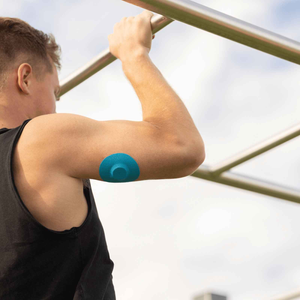
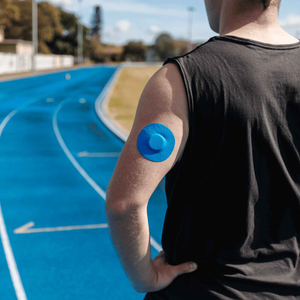
Back of upper arm
-
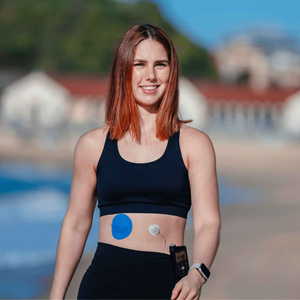
Abdomen
-
Only the sites your device lists: Dexcom G6, Dexcom G7 and Abbott Libre 3 list no thigh site
-
Upper buttock for children
Different systems may vary slightly. For clarity around Libre system differences, review Freestyle Libre 2 and 3 readers explained.
The best CGM placement balances approved accuracy with your sleep position and activity level.
CGM Placement Comparison: Arm Vs Abdomen Vs Thigh
|
Placement Site |
Accuracy Stability |
Compression Risk |
Adhesion Stress |
Best For |
|
Back of arm |
Strong clinical validation |
Moderate for side sleepers |
Medium |
Most adults |
|
Abdomen |
Stable during daytime |
Higher if stomach sleeper |
Low |
Desk-based users |
|
Upper thigh |
Stable in motion |
Low |
Higher friction from clothing |
Active users |
|
Upper buttock |
Protected area |
Low |
Low |
Children |
The thigh is not a site Dexcom or Abbott lists for their sensors, so check your device's own instructions before using it.
Use this comparison to evaluate CGM placement based on lifestyle rather than habit.
How Exercise And Sweat Impact CGM Placement Stability
Exercise increases sweat, blood flow, and muscle contraction. These factors stress both the sensor filament and the surrounding cgm adhesive.
If your CGM placement is correct but lifting occurs early, reinforcement may help more than relocation.
Active users often benefit from:
-
Breathable cgm adhesive patches
-
Flexible dexcom overpatch support
-
Sweat-resistant libre patch reinforcement
-
Targeted cgm stickers during training
For movement-specific wear tips, read why athletes keep spare CGM patches.
If your CGM placement works but heat or workouts cause lifting, explore durable options in the CGM patch collection.
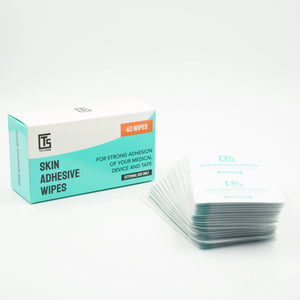
For added grip before insertion, Type Strong skin adhesive wipes can strengthen cgm adhesive hold while remaining breathable.
Supporting CGM placement early reduces unnecessary sensor changes.
How To Prevent Compression Lows With Better CGM Placement
Compression lows happen when body weight presses on the sensor during sleep, temporarily affecting local fluid flow.
To reduce compression-related instability:
-
Avoid CGM placement directly under your dominant sleeping side
-
Rotate placement every sensor cycle
-
Avoid tight clothing over the sensor
If overnight readings are inconsistent, review sleep comfort tips for CGM users.
Often, adjusting CGM placement resolves repeated false lows more effectively than recalibration.
Common CGM Placement Mistakes That Cause Inaccurate Readings
Understanding common errors improves long-term wear success.
Placing The Sensor Over Scar Tissue
Scar tissue may alter interstitial fluid dynamics. Avoid inserting in the exact same area repeatedly.
Reusing The Same CGM Placement Site
Repeated CGM placement in one location increases inflammation and weakens adhesion strength.
Choosing High Friction Areas
Waistbands and tight clothing areas stress cgm adhesive patches and increase lifting risk.
Over Layering Adhesive
Stacking multiple rigid layers can irritate skin and reduce airflow. Breathable reinforcement works better than excessive layering.
If irritation occurs, review how to identify a CGM patch reaction.
CGM Placement Rotation Strategy For Long Term Skin Health
A structured rotation pattern supports skin recovery and consistent performance.
Example rotation:
-
Left arm
-
Right arm
-
Abdomen left
-
Abdomen right
-
Upper thigh
Allow full skin recovery between placements. Healthy skin improves both comfort and cgm adhesive durability.
How To Stop Your CGM From Falling Off After Placement
Early detachment is often an adhesion issue rather than a placement issue.
To improve stability:
-
Clean and dry skin thoroughly
-
Avoid lotions before insertion
-
Apply breathable dexcom overpatch or reinforced libre patch support
-
Use skin adhesive wipes if sweat affects adhesion
For how an overpatch fits over a Dexcom G7 sensor, see our guide to Dexcom G7 overpatches: what they are and why you might need one.
Stable CGM placement combined with reliable adhesion reduces mid-cycle stress.

Support Your Next CGM Placement With Stable, Breathable Adhesion
Even the best CGM placement can struggle if adhesion does not match your lifestyle.
Heat, sweat, sleep pressure, and movement all affect how securely your sensor stays in place. Reinforcing your CGM placement with breathable support helps reduce lifting and unnecessary replacements.
Thoughtful CGM placement paired with the right adhesion support makes monitoring more predictable and sustainable.
Where do you put a Dexcom G7?
Dexcom US lists the back of the upper arm for the Dexcom G7 from age 2, and the upper buttocks for ages 2 to 6. The Dexcom G7 15 Day is listed for the back of the upper arm only, for ages 18 and older.
Dexcom US does not list the abdomen for the G7, saying users who wore it on the back of the upper arm had optimal system performance in testing. Dexcom UK's page lists the abdomen or the back of the upper arm for ages 2 and older, plus the upper buttocks for ages 2 to 6, so your market matters.
Can I put the Dexcom on my stomach? Not with the G7 under Dexcom US guidance. Dexcom UK lists the abdomen for the G7, and Dexcom Canada lists the belly for the G6 (below).
Where is the best place for a Dexcom G7 if you sleep on your side? Dexcom does not name a site for side sleepers. It does say to choose a spot unlikely to be bumped, pushed or laid on while sleeping. A reasonable approach is the back of the arm on the side you don't sleep on, or the upper buttocks for a child aged 2 to 6.
The sensor sits on the skin and the patch goes over the top. If it's the patch adhesive that keeps catching, a Dexcom G7 / ONE+ patch is a separate fix from where the sensor goes.
Where do you put a Dexcom G6?
Dexcom Canada lists the belly or the back of the upper arm for Dexcom G6 wearers aged 18 and older, and the belly or the upper buttocks for ages 2 to 17.
Dexcom stopped manufacturing the G6 on 1 July 2026, so this applies mainly to existing stock. A Dexcom G6 patch is cut for the G6 shape.
References
Heinemann, L., Freckmann, G., Ehrmann, D. and Faber-Heinemann, G. (2018) 'Real-time continuous glucose monitoring in adults', Journal of Diabetes Science and Technology, 12(3), pp. 603–612. Available at: https://journals.sagepub.com/doi/10.1177/1932296818765658
Dexcom (US). 'Where can I insert my Dexcom G7 sensor?' Available at: https://www.dexcom.com/en-us/faqs/where-can-i-insert-my-dexcom-g7-sensor
Dexcom (US). 'Why is G7 only indicated for arm wear when G6 could be worn on the abdomen?' Available at: https://www.dexcom.com/en-us/faqs/why-is-g7-only-indicated-for-arm-wear-when-g6-could-be-worn-on-the-abdomen
Dexcom (UK). 'How and Where to Insert Dexcom Sensors.' Available at: https://www.dexcom.com/en-gb/faqs/sensor-insertion
Dexcom (Canada). 'Where can I insert my G6 sensor?' Available at: https://www.dexcom.com/en-ca/faqs/where-can-i-insert-my-g6-sensor
People also ask
Where Is The Most Accurate CGM Placement Site?
For most adults, the back of the upper arm demonstrates strong accuracy when inserted and rotated properly. Approved CGM placement sites are clinically validated to meet performance standards (Heinemann et al., 2018).
Does CGM Placement Affect Readings?
Yes. CGM placement influences compression risk, tissue response, and sensor stability. Poor placement may increase false lows or signal interruptions.
Is Arm Or Stomach Better For CGM Placement?
There is no universal answer. Your best CGM placement depends on sleep position, body composition, and activity level. Rotation helps identify what works best for you.
How Often Should You Rotate CGM Placement?
Rotate CGM placement every sensor cycle. Avoid consecutive placement in the exact same location.


