

How Does FreeStyle Libre Work? The Sensor, the Needle and the Plus Sensors

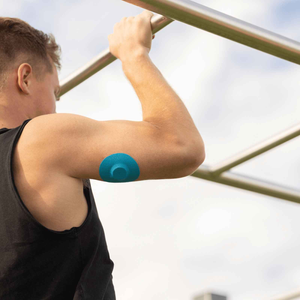
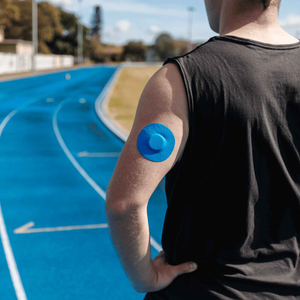
How it works: The FreeStyle Libre is a small sensor worn on the back of the upper arm that uses a thin filament just under the skin to read glucose in the fluid around your cells, called interstitial fluid (Abbott).
The needle: An applicator uses a needle to place that filament, and the needle comes away with the applicator. What stays under the skin is the filament, which Abbott says is less than 0.4 mm wide and sits about 5 mm deep (Abbott).

What is the FreeStyle Libre?
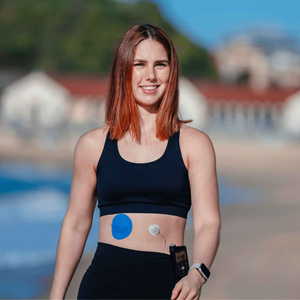
FreeStyle Libre is a continuous glucose monitoring (CGM) system made by Abbott. A small, round sensor sits on the back of the upper arm and tracks your glucose day and night, without routine fingersticks.
In the US, Abbott now sells two sensors for personal use: the FreeStyle Libre 2 Plus and the FreeStyle Libre 3 Plus. Both can be worn for up to 15 days (Abbott).
One honest caveat: "no fingersticks" doesn't mean never. Abbott says you still need a fingerstick if your readings or alarms don't match how you feel, or if you see the Check Blood Glucose symbol during the first 12 hours (Abbott).

How does a FreeStyle Libre sensor read glucose?
The filament under the skin doesn't sit in a blood vessel. It sits in interstitial fluid, which Abbott describes as "a thin layer of fluid that surrounds the cells" (Abbott). Glucose moves from your blood into this fluid, and the filament measures it there. Abbott's FreeStyle Libre 2 Plus guide puts it simply: once the sensor is on, "the sensor filament will measure your glucose" (Abbott).
Here's what happens after you apply a new sensor:
-
You start it. You start the sensor in Abbott's app or on a reader.
-
It warms up. Both the FreeStyle Libre 2 Plus and the FreeStyle Libre 3 Plus need a 60-minute warm-up before they give readings (Abbott, 2 Plus; Abbott, 3 Plus).
-
It reads every minute. On the FreeStyle Libre 3 Plus, readings are sent automatically to your smartphone every minute, with no scanning needed (Abbott). On the FreeStyle Libre 2 Plus, Abbott says the current glucose reading is updated every minute (Abbott).
Because it reads the fluid around your cells rather than your blood, a sensor reading and a fingerstick won't always match exactly, which is why Abbott's fingerstick rule above exists.
Is there a needle in a FreeStyle Libre?
Yes, but only in the applicator, and only for a moment. Abbott's own wear guide says it plainly: "Sensor applicators will contain a needle" (Abbott).
Press the applicator against your arm and the needle guides the filament under the skin. Lift the applicator away and the needle goes with it.
Does the needle stay in your arm?
No. In Abbott's words: "The needle does not stay in your arm" (Abbott).
What stays is the filament. Abbott says the part inserted under the skin is less than 0.4 mm wide and goes in about 5 mm (Abbott), "making it barely noticeable for most users" (Abbott).
Does applying it hurt?
Abbott describes both the FreeStyle Libre 2 Plus and FreeStyle Libre 3 Plus as "painless to apply," citing its 2025 study in the Journal of Diabetes Science and Technology (Abbott, 2 Plus; Abbott, 3 Plus). That's Abbott's wording; everyone's skin is different.
Libre 2 Plus and 3 Plus: what Abbott changed
Abbott US replaced its original FreeStyle Libre 2 and FreeStyle Libre 3 sensors with the Plus versions. The older sensors were available through 30 September 2025, and the Plus sensors that replace them can be worn for up to 15 days: "Just two sensors a month" (Abbott).
The earlier version of this guide said "up to 14 days". On a Plus sensor, plan around 15.
|
|
FreeStyle Libre 2 Plus |
FreeStyle Libre 3 Plus |
|
Wear time |
Up to 15 days |
Up to 15 days |
|
Warm-up |
60 minutes |
60 minutes |
|
Readings |
Current reading updated every minute |
Sent automatically to your phone every minute |
|
Water |
Up to 1 metre for 30 minutes |
Up to 1 metre for 30 minutes |
Sources: Abbott, FreeStyle Libre 2 Plus; Abbott, FreeStyle Libre 2 Plus guide; Abbott, FreeStyle Libre 3 Plus.
Choosing between them? See our FreeStyle Libre 2 Plus vs 3 Plus comparison.
How to apply the FreeStyle Libre sensor
Abbott's steps, in short (Abbott, 2 Plus guide; Abbott, wear tips):
-
Pick a spot. Choose a flat area on the back of your upper arm, at least 1 inch (2.5 cm) from an insulin injection site.
-
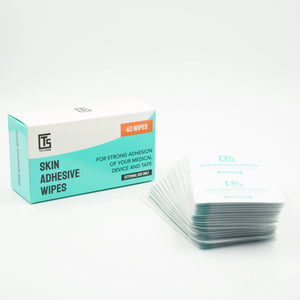
Clean the skin. Wash with non-moisturising, fragrance-free soap and water, then use an alcohol wipe and let it air dry.
-
Apply. Get the applicator ready as your sensor's instructions describe, then press it down firmly over the site until you hear a click. Gently pull the applicator away.
-
Start and wait. Start the sensor in the app or reader and allow the 60-minute warm-up.
-
Switch arms next time. Abbott recommends putting your next sensor on the other arm to avoid irritation.
For the full walkthrough, see how to apply and use the FreeStyle Libre. Putting on your very first one? Read your first FreeStyle Libre sensor before you start.
How readings reach your phone
The FreeStyle Libre 3 Plus streams readings to your smartphone automatically, every minute (Abbott).
With the FreeStyle Libre 2 Plus, the current reading updates every minute, and Abbott says the app captures data when your phone is close to the sensor. If the phone and sensor haven't communicated for more than 20 minutes, you'll get a signal loss alert (Abbott).
A few things apply to both:
-
Alarms need range. Abbott says alarms only reach you when they're switched on and the sensor is within 33 feet, unobstructed, of your phone or reader (Abbott).
-
Not every phone works. Abbott's apps only work with certain phones and operating systems. Check Abbott's smartphone compatibility guide.
-
Sharing needs internet. To send your data to LibreView (for your care team), your phone needs an internet connection (Abbott).

Pros and cons of the FreeStyle Libre
Pros
-
Up to 15 days per sensor on both Plus sensors (Abbott).
-
Readings every minute, sent automatically to your phone on the FreeStyle Libre 3 Plus (Abbott).
-
No routine fingersticks (Abbott).
-
Water resistant to 1 metre for up to 30 minutes, so you can bathe, swim and exercise in it (Abbott).
-
Small. Abbott calls the FreeStyle Libre 3 Plus the world's smallest 15-day real-time CGM sensor among patient-applied sensors (Abbott).
Cons
-
Fingersticks aren't gone completely, as covered above.
-
An hour with no readings during each warm-up.
-
Phone limits. Only some phones are supported, and alarms need the sensor within 33 feet.
-
30 minutes underwater, max.
-
Skin and adhesion. Abbott suggests alternating arms to avoid irritation and publishes a full tip sheet on keeping sensors on (Abbott).
Keeping the sensor on
The sensor is Abbott's device. It holds the filament under your skin and has its own adhesive underneath. Its wear time, up to 15 days on the Plus sensors, is how long Abbott says it can measure your glucose.
A patch (also called an overpatch) is a separate adhesive sheet that goes on top of the sensor to hold its edges down. It doesn't measure anything. It stops door frames, seatbelts and towels catching the sensor's edge and peeling it off early.
Abbott's own wear tips include using an overbandage, with a few rules: put it on at the time you apply the sensor, don't cover the opening in the centre of the sensor, and don't take it off until you're ready to remove the sensor (Abbott).
That's where Type Strong comes in. Our FreeStyle Libre patches are made for the FreeStyle Libre 2 and FreeStyle Libre 3 and hold for 10+ days when applied to clean, dry skin. Comparing options? Read our guide to the best covers for Libre 3 sensors, or browse the full CGM patch collection.
FAQ
How does the FreeStyle Libre glucose monitor work?
A small sensor on the back of your upper arm uses a thin filament just under the skin to measure glucose in interstitial fluid, the fluid around your cells (Abbott).
Does the FreeStyle Libre 3 have a needle?
The applicator has a needle, which places the filament under the skin. The needle comes away with the applicator (Abbott).
Does the Libre 3 needle stay in your arm?
No. Abbott says the needle does not stay in your arm. What stays is the filament, less than 0.4 mm wide and about 5 mm under the skin (Abbott).
What size needle does the FreeStyle Libre 3 Plus use?
Abbott doesn't publish a needle gauge on its consumer pages. What it does publish is the size of the part that stays in: less than 0.4 mm wide, inserted about 5 mm (Abbott).
How often does the Libre 3 take readings?
The FreeStyle Libre 3 Plus sends readings to your smartphone automatically every minute (Abbott).
How long does a FreeStyle Libre sensor last?
The FreeStyle Libre 2 Plus and FreeStyle Libre 3 Plus can each be worn for up to 15 days (Abbott).
Can I shower or swim with a FreeStyle Libre?
Yes. Abbott says the sensor is water resistant in up to 1 metre (3 feet) of water for up to 30 minutes (Abbott).
Safety information
Before using any FreeStyle Libre sensor, read the indications and safety details of the FreeStyle Libre and the user manual that comes with your sensor. This article is general information, not medical advice. Talk to your diabetes care team about what's right for you.
References
-
Abbott. FreeStyle Libre 3 Plus system. freestyle.abbott (US).
-
Abbott. FreeStyle Libre 2 Plus system. freestyle.abbott (US).
-
Abbott. Get started guide: FreeStyle Libre 2 Plus (PDF).
-
Abbott. FreeStyle Libre sensor transition. freestyleprovider.abbott (US).
-
Abbott. Useful tips for sensor wear, FreeStyle Libre family of personal CGMs (PDF).
-
Abbott. How deeply is the sensor inserted? Abbott support.
-
Abbott. Will the user feel the sensor while wearing it? Abbott support.
-
Abbott. What is a continuous glucose monitor (CGM)? payer.freestyle.abbott.
-
Abbott. Smartphone compatibility guide.


