


Cardio vs Strength Training: Which Is Better for Blood Sugar?

If you’re living with diabetes and you move your body, you already know the deal: exercise helps, but it can also feel hard to manage your glucose levels. A steady run may pull your glucose down. A heavy lifting session might nudge it up. The two readings look like opposites, and it’s easy to assume one of them means you did something wrong.
You didn’t. Most of the time, your body is doing exactly what it’s meant to do, and your continuous glucose monitor is just showing you the difference in real time. Cardio and strength training don’t move glucose the same way, and once you can read which is which, the unpredictable starts to look a lot more like a pattern.
This guide walks through what your CGM shows during each kind of workout, why the numbers move the way they do, and how to stay steady through both. It’s educational rather than medical advice, so keep following your own clinician’s guidance for your numbers.
Remember, every body responds to activity. So if your levels don't follow "typical" patterns, don't panic. Everyone's genetics, fitness level and general physiology is all unique. If you are concerned, please speak with your healthcare provider.

Cardio or strength training:
Cardio usually lowers your glucose during and after the session, while strength training can push it up for a while before it settles. Neither is the “right” choice. Cardio is your quickest lever for bringing a number down, strength training does more for long-term control, and combining the two tends to give people living with diabetes the steadiest results over time. The trick isn’t picking a winner. It’s reading the trend arrow on your CGM before you start and matching your workout to the direction you’re already heading, not just the number on the screen.

What matters most: short-term vs long-term blood sugar effects
The “best” workout depends on your goal.
Short-term (what your CGM shows today)
During exercise:
-
muscles use glucose for energy
-
insulin sensitivity increases
-
glucose often drops (especially with cardio)
However, high-intensity or resistance training can raise glucose temporarily.
Long-term (what improves control over time)
Over time, both exercise types:
-
improve insulin sensitivity
-
reduce glucose variability
-
support better overall control
This is why combining both is recommended.
Before you start, check your CGM trend arrow and match your workout to your direction not just the number.

How cardio affects your glucose
Cardio, the steady stuff like walking, cycling, jogging, or swimming, usually lowers your glucose in a fairly predictable way. You’ll often see a gradual slope down on your CGM during the session, more lowering for a while afterwards, and insulin sensitivity that stays raised once you’ve stopped.
Predictable doesn’t mean risk-free, though. The same things that make cardio so good at bringing a number down are what can tip you into a low: longer sessions, starting out when you’re already trending downward, and a delayed dip that can arrive hours later once the workout is well behind you. If your trend arrow is already pointing down before you lace up, that’s the moment to be cautious rather than push into a hard cardio session.

Strength training blood sugar benefits: misunderstood but important
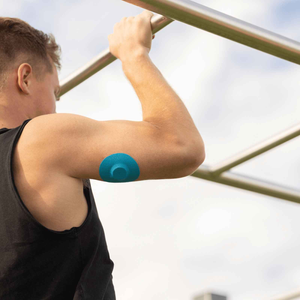
Strength training is the one that confuses people, because the CGM reading often goes up during the workout, not down. That looks alarming if you’re expecting exercise to lower your glucose. It’s usually nothing to fix.
Here’s what’s behind it: hard, short efforts like weights or HIIT trigger a release of adrenaline, which signals your liver to release stored glucose for the burst of energy your muscles are demanding. The result is a temporary rise that tends to settle on its own. Whether you wear a Dexcom G7 or a FreeStyle Libre 3, that short spike on the screen is the expected response to intensity, not a sign your session went wrong. And the longer-term payoff is real: a randomised controlled trial reported by Kobayashi and colleagues found that, in some groups, strength training improved HbA1c more than aerobic exercise alone, with greater muscle mass linked to better glucose control. That 2023 paper later carried a published correction, so it’s worth reading the corrected version, but the direction of the finding held.
Cardio vs strength training: quick comparison
|
Cardio |
Strength training |
|
Lowers glucose during exercise |
May raise glucose short term |
|
Higher risk of lows |
Lower immediate risk of lows |
|
More predictable |
More variable |
|
Best for immediate control |
Best for long-term stability |
Blood sugar during exercise: spikes, lows and how to stay in control
Even when you understand the differences, your glucose can still feel unpredictable.
You may see:
-
spikes during strength training
-
drops during cardio
-
delayed lows hours later
These patterns are normal and manageable.
Why blood sugar spikes after exercise
Spikes are common with:
-
weight training
-
HIIT
-
high-intensity efforts
This happens because:
-
adrenaline increases glucose release
-
liver outputs stored glucose
Your CGM may show a spike even when your workout is effective.
Why blood sugar drops during or after exercise
Lows are more common with:
-
steady cardio
-
longer sessions
This happens because:
-
muscles absorb glucose
-
insulin sensitivity stays elevated
This can lead to delayed hypoglycemia.
Combine training types
-
start with strength training
-
finish with light cardio
This helps stabilise glucose.
Learn your patterns
Use your CGM to:
-
track workouts
-
identify trends
-
adjust gradually

How to interpret your CGM during workouts
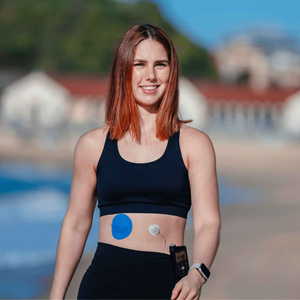
Your CGM shows trends—not exact real-time blood glucose.
If you want to improve accuracy, see this CGM placement guide.
Key limitation: lag
-
5–15 minute delay
-
more noticeable during rapid changes
If symptoms do not match readings:
-
trust symptoms
-
confirm if needed

Adhesion issues: keeping your CGM reliable during exercise
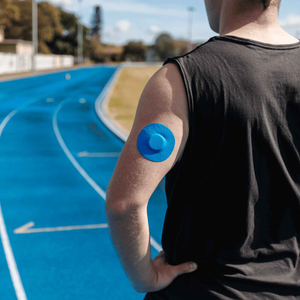
During workouts:
-
sweat loosens adhesive
-
movement lifts edges
-
readings become less reliable
If you want to avoid this, read top CGM patch issues and how to fix them.
How to improve reliability
-
use CGM patches made for training days
-
apply skin adhesive wipes for better wear time
-
follow this skin prep guide
Better adhesion = better data.
Safety essentials
Hypoglycemia
-
common during cardio
-
can occur hours later
High glucose and ketones
-
check levels before exercise
-
avoid intense activity if ketones are present
You do not need to choose between cardio and strength training.
-
cardio helps lower glucose quickly
-
strength training improves long-term control
-
combining both gives the best results
Your CGM gives you visibility. Your routine gives you control.
And when your sensor stays secure during workouts, your data becomes far more reliable.
If you want to reduce interruptions, explore CGM patches designed for active wear and adhesive wipes that improve sensor hold.
People also ask
Does cardio or strength training lower blood sugar more effectively?
Cardio usually lowers blood sugar more quickly during and after exercise because muscles use glucose for energy. Strength training may raise glucose temporarily but helps improve long-term blood sugar control by increasing muscle mass and insulin sensitivity.
Why does blood sugar spike after exercise instead of dropping?
Blood sugar can rise after exercise, especially during strength training or high-intensity workouts, because stress hormones like adrenaline signal the liver to release glucose. This is a normal response and usually temporary.
Can exercise cause low blood sugar hours later?
Yes. Exercise can increase insulin sensitivity for several hours, which may lead to delayed hypoglycemia. This is more common after longer or moderate-intensity cardio sessions.
Should I correct high blood sugar immediately after a workout?
Not always. Some post-exercise spikes resolve naturally. Correcting too quickly can lead to a drop later. It is usually better to monitor the trend before taking action, based on your care plan.
What is the best exercise routine for stable blood sugar?
A combination of cardio and strength training is usually most effective. Cardio helps manage short-term glucose levels, while strength training improves long-term stability and insulin sensitivity.
References
American Diabetes Association (n.d.) Exercise and type 1 diabetes. Available at: https://diabetes.org (Accessed: 24 March 2026).
American Diabetes Association (n.d.) Hyperglycemia (high blood glucose). Available at: https://diabetes.org (Accessed: 24 March 2026).
Colberg, S.R., Sigal, R.J., Yardley, J.E., Riddell, M.C., Dunstan, D.W., Dempsey, P.C., Horton, E.S., Castorino, K. and Tate, D.F. (2016) ‘Physical activity/exercise and diabetes: A position statement of the American Diabetes Association’, Diabetes Care, 39(11), pp. 2065–2079. doi:10.2337/dc16-1728.
Danne, T., Nimri, R., Battelino, T., Bergenstal, R.M., Close, K.L., DeVries, J.H., Garg, S., Heinemann, L., Hirsch, I., Amiel, S.A., Beck, R., Bosi, E., Buckingham, B., Cobelli, C., Dassau, E., Doyle, F.J., Heller, S., Hovorka, R., Jia, W., Jones, T., Kordonouri, O., Kovatchev, B., Kowalski, A., Laffel, L., Maahs, D., Murphy, H.R., Nørgaard, K., Parkin, C., Renard, E., Saboo, B., Scharf, M., Tamborlane, W.V., Weinzimer, S.A. and Phillip, M. (2017) ‘International consensus on use of continuous glucose monitoring’, Diabetes Care, 40(12), pp. 1631–1640. doi:10.2337/dc17-1600.
Englert, K., Ruedy, K.J., Coffey, J., Tamborlane, W.V., Beck, R.W. and Diabetes Research in Children Network (DirecNet) Study Group (2014) ‘Skin and adhesive issues with continuous glucose monitors’, Journal of Diabetes Science and Technology, 8(4), pp. 745–751. doi:10.1177/1932296814529893.
Kobayashi, Y., Long, J., Dan, S., Johannsen, N.M., Talamoa, R., Raghuram, S., Chung, S., Kent, K., Basina, M., Lamendola, C., Haddad, F., Leonard, M.B., Church, T.S. and Palaniappan, L. (2023) ‘Strength training is more effective than aerobic exercise for improving glycaemic control and body composition in people with normal-weight type 2 diabetes: a randomised controlled trial’, Diabetologia. doi:10.1007/s00125-023-05958-9.
Kobayashi, Y., Long, J., Dan, S., Johannsen, N.M., Talamoa, R., Raghuram, S., Chung, S., Kent, K., Basina, M., Lamendola, C., Haddad, F., Leonard, M.B., Church, T.S. and Palaniappan, L. (2024) ‘Correction to: Strength training is more effective than aerobic exercise…’, Diabetologia, 67(8), pp. 1725–1726. doi:10.1007/s00125-024-06135-2.
Zaharieva, D.P., Riddell, M.C. and Henske, J. (2018) ‘The accuracy of continuous glucose monitoring during exercise in type 1 diabetes’, Journal of Diabetes Science and Technology, 13(1), pp. 140–141. doi:10.1177/1932296818804550.


