

Strong enough for school, fun enough for holidays: CGM patch tips for kids

What keeps a CGM on a child
A CGM stays on a child through three things working together: correct placement for their age, proper skin prep before the sensor goes on, and a device-matched adhesive patch reinforcing the edge from day one. No single step covers everything on its own, and no patch can save a sensor that's already been pulled out. Get the first three right and most kids get the sensor's full rated wear time without a mid-week change.
Why a sensor comes off a child

Kids lose sensors differently than adults do, and it's worth naming the actual causes rather than treating every lift the same way.
Rough play
Climbing, tumbling, and general roughhousing put direct pressure and knocks on a sensor that an adult's day rarely does. A knock hard enough can pull the whole sensor free, not just lift an edge, and that's a lost sensor regardless of how good the adhesive underneath it was.
Sleeves and straps
School uniforms, backpack straps, and PE kits all rub against a sensor repeatedly through the day. That friction works at the edge of the adhesive specifically, which is why edge reinforcement matters more for kids than for most adults.
Water
Swimming lessons, sweaty PE, and just being a kid outside all expose a sensor to moisture more often than an adult's typical day. Water alone rarely causes a sudden loss, but it steadily weakens adhesive over hours, which is where early prep and a water-resistant patch both help.

Where to place the sensor, by age
Placement isn't one-size-fits-all across childhood. What works for a toddler often doesn't work for a ten-year-old, and vice versa.
Toddlers (roughly 2 to 4)
Younger children are more likely to pick at a sensor they can see or easily reach. The back of the upper arm is the standard approved site for most devices at this age, and Dexcom G7 also allows the upper buttocks as an alternative for children aged 2 to 6, which some parents find reduces picking simply because it's out of sight and out of reach.
Primary school age (roughly 5 to 9)
The back of the upper arm remains the standard site for most devices through this age range. At this stage it's worth thinking about backpack straps and uniform sleeves specifically, since a sensor sitting right under a strap will take more daily friction than one placed slightly higher or lower on the arm.
Older kids and tweens (roughly 10 to 14)
Kids this age often want a say in placement and may prefer a spot that's easily hidden under a sleeve for school and more visible for sport or swimming. Site rotation matters more here too, since repeated use of the same small area can affect both skin health and adhesion over time.
Always follow your specific device's approved sites; not every CGM is cleared for every location, and Dexcom G7, FreeStyle Libre 2 Plus and Libre 3 Plus, and Medtronic Guardian 4 all have different approved placements and different minimum ages.
Skin prep, the step most parents skip
A strong patch starts before the sensor even goes on. Five steps make the biggest difference:
-
Wash the site with mild soap and water, or an alcohol wipe, and let it dry completely.
-
Avoid applying lotion, sunscreen, or oil-based products to the site beforehand.
-
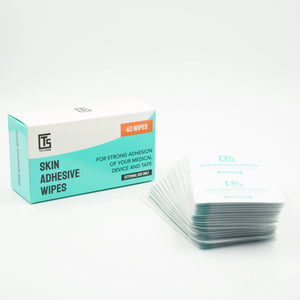
Use skin adhesive wipes to create a thin, tacky base layer that helps both the sensor's own adhesive and any overpatch grip better.
-
Press the sensor and any patch firmly around the edges once applied, giving it a moment to settle rather than moving straight into activity.
-
Avoid swimming or heavy sweating for about an hour after application, so the adhesive has time to properly bond.
Our full guide on proper skin prep for patches walks through this in more detail.
One patch through the whole school week
Type Strong patches are designed to hold for 10 or more days, which covers most school-week and sensor-cycle lengths without a mid-week swap. That means one patch applied on a Sunday can realistically see a child through classroom hours, recess, PE, and after-school activities without you needing to check whether it'll survive to Friday.
Explore Dexcom G7 patches, FreeStyle Libre patches, or try a mix with the patch bundle. If your child is particularly active, our guide on why athletes and active users keep spare CGM patches is a useful next read.
The school day
A school day throws more at a sensor in six hours than most adult days do in a week: a jumper sleeve catching in a doorway, a knock in the corridor, a scrape during PE, a splash in the bathroom sink. The single biggest lever for surviving that is a patch applied before school starts, not one added after the first sign of trouble. We've written a dedicated guide on getting a CGM through the school day specifically, covering everything from what to tell teachers to what to pack in a school bag for a quick fix, which is worth a read if school is where most of your child's sensor losses happen.
Patch lifting at the edge
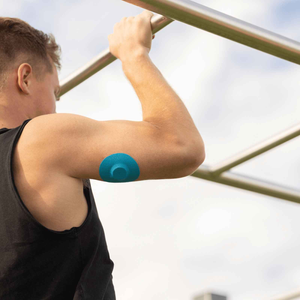
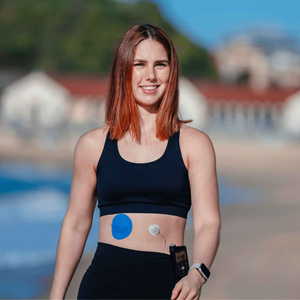
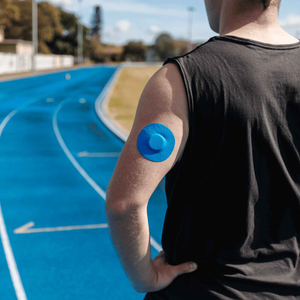
It helps to be precise about which part is lifting. The sensor itself is the small device your child's CGM system relies on to take readings. The patch is the adhesive layer over the top, reinforcing the sensor's own adhesive. When a parent says "the patch is lifting," that's almost always the overpatch's edge starting to peel, not the sensor underneath failing. That's a good sign in one way: it means the patch is doing its job and taking the wear that would otherwise hit the sensor's own adhesive directly. If you see it early, don't press the peeling edge down with a finger, since that introduces oils exactly where you need grip. A small piece of tape over just the lifted section can buy time until the next scheduled change.

Does the patch get in the way of the reading?
No. A correctly applied overpatch sits over the sensor housing and its existing adhesive, not over the reading window or the part of the sensor doing the actual glucose measurement. It reinforces the bond holding the sensor in place; it doesn't touch, and can't interfere with, how the sensor reads.
Which patch fits which sensor
|
Sensor |
Matching Type Strong patch |
|
Dexcom G6, G7, ONE+ |
|
|
FreeStyle Libre 2, Libre 3, Libre 2 Plus, Libre 3 Plus |
|
|
Medtronic Guardian 3, Guardian 4 |
|
|
Omnipod 5 |
Type Strong uses one patch material across the whole range, so the real decision is simply which cut matches your child's device, not which material performs better.
Colour, choice and letting a child pick

Letting a child choose their patch colour or pattern, especially during holidays when school uniform rules don't apply, is a small thing that can make a real difference to how they feel about wearing a sensor. It won't fix a genuinely poor adhesive bond, but it does turn something a child has no choice about (needing the sensor at all) into something they have a say in (what it looks like). The patch bundle includes a mix of colours and cuts if you want to give your child options without committing to a single style.
People also ask
Are there any Dexcom G7 patches available for kids?
Yes. Dexcom G7 / ONE+ patches are sized for the sensor itself, not for a specific age, so the same patch fits a child's G7 or ONE+ sensor as an adult's. The Dexcom G7 is FDA cleared for children aged 2 and older.
How can I get free Dexcom patches?
Dexcom doesn't sell its own branded overpatches, so "free Dexcom patches" usually means a free replacement sensor rather than an adhesive patch. If a Dexcom sensor fails before the end of its rated wear, Dexcom's sensor replacement policy provides a free replacement when the failure is confirmed as a product issue, and pediatric users are generally exempted from the usual annual replacement limits. Contact Dexcom Technical Support directly to start a claim.
Can I buy CGM patches at Walgreens?
Availability varies by store and changes over time, so it's worth checking directly with your local pharmacy or their website before a trip. CGM overpatches are also widely available online, including through Type Strong.
Do CGM patches work? Yes, for their intended purpose. A well fitted, device-matched patch reinforces the sensor's existing adhesive at the edge, which is where most lifting starts, and extends how reliably a sensor stays on through activity, sweat, and water. What a patch can't do is save a sensor that's already been knocked off, or extend a sensor's approved wear time beyond what the manufacturer rates it for.
What is the best CGM for kids? It depends on age and setup rather than one universal answer. The Dexcom G7, ONE+, and FreeStyle Libre 2 Plus and Libre 3 Plus are all approved from age 2. Medtronic Guardian 4 is approved from age 7 and pairs specifically with the MiniMed 780G pump. Your child's endocrinologist is best placed to weigh accuracy, pump compatibility, and your child's specific needs.
How much does a CGM patch cost? Most 20-packs of device-specific overpatches, including Type Strong's, work out to roughly a dollar or so per patch, though exact pricing varies by retailer, region, and pack size. Buying in a bundle across sizes and colours is often more economical than buying single-device packs repeatedly.
Can I cover my CGM with a patch? Yes. That's exactly what an overpatch is designed to do: sit over the sensor and its factory adhesive to reinforce the bond, without covering or interfering with the part of the sensor that takes readings.
A warm close
You didn't sign up to become an expert in adhesive science when your child was diagnosed, and it's reasonable to feel like there's always one more thing to think about. The good news is that most of what keeps a sensor on a busy, moving kid comes down to a handful of repeatable habits: the right spot for their age, a few minutes of skin prep, and a patch that matches their device. Once that routine is in place, you can spend a lot less time checking a shoulder for a lifted edge and a lot more time just letting them be a kid.
References
-
Dexcom. "How long can I wear the Dexcom G7 sensor?" dexcom.com
-
Dexcom. "Sensor Replacement Policy for Dexcom CGM Products." dexcom.com
-
American Diabetes Association Consumer Guide. "CGMs." consumerguide.diabetes.org
-
Englert, K., Ruedy, K., et al. "Skin and Adhesive Issues With Continuous Glucose Monitors: A Sticky Situation." Journal of Diabetes Science and Technology, 2014.


