

Freestyle Libre vs. Eversense CGM: A Head-to-Head Review 2026

If you're weighing up the FreeStyle Libre against the Eversense, the first thing worth knowing is that they're not really the same kind of device. One you put on yourself in about a minute. The other, a healthcare provider places just under the skin of your arm, and then it stays there for months.
So the real question isn't which brand wins. It's how hands-on you want to be with the sensor on your arm, and for how long. This walks through how each one goes on, how long it lasts, and what it asks of you day to day, so the choice feels clear by the end. If you'd like to see the wider field first, this guide to the best CGMs sets the scene.

The short version
The FreeStyle Libre, made by Abbott, is a small sensor you apply yourself to the back of your upper arm. It reads your glucose for up to 14 days on the Libre 2, or up to 15 on the newer Libre 3 Plus, sending the numbers straight to your phone with no fingersticks to calibrate it.
The Eversense, made by Senseonics, is the only implantable CGM. A trained healthcare provider places the sensor under the skin of your upper arm in a short appointment, and it lasts up to 180 days on the Eversense E3, or a full year on the Eversense 365. In return, it asks for a small procedure to start and the occasional fingerstick to stay accurate.
So it comes down to this. The Libre suits you if you want simple, lower-cost, and self-applied. The Eversense suits you if you'd trade a minor procedure for barely having to think about your sensor.

FreeStyle Libre at a glance
The FreeStyle Libre is the one you handle entirely on your own. You put it on the back of your upper arm, and from there it quietly does its job. The Libre 3 sends a fresh reading to your phone every minute with no scanning, and both the Libre 2 and Libre 3 are factory calibrated, so there's nothing to fingerstick to keep them honest.
It tends to suit people who want something low-cost and low-fuss they can manage themselves. If you're still deciding between the Libre generations, this look at how the Libre models compare is a useful next read.
Eversense at a glance
The Eversense takes the opposite approach. Instead of an adhesive sensor on the surface, a small sensor sits under the skin of your upper arm, placed by a healthcare provider, with a removable smart transmitter resting on top. The transmitter is held by a gentle silicone adhesive you change daily, and because it lifts off, you can take it off for a shower and pop it back without wasting the sensor.
The Eversense E3 runs up to 180 days, and the newer Eversense 365 up to a full year, far longer than any surface sensor. The trade-off is the fingersticks it needs to stay accurate, roughly once a day on the E3 after the first few weeks and about once a week on the 365, plus that small procedure to begin. The transmitter also buzzes on your arm for highs and lows, so an alert reaches you even when your phone's in another room.

FreeStyle Libre vs Eversense, side by side
Here's the shape of it at a glance. The simplest way to hold the difference in your head: the Libre lives on top of your skin, the Eversense lives under it.
|
Feature |
FreeStyle Libre |
Eversense |
|
Sensor wear |
Up to 14 days (Libre 2), up to 15 days (Libre 3 Plus) |
Up to 180 days (E3), up to 1 year (365) |
|
How it goes on |
You apply it yourself to the back of your upper arm |
Placed under the skin by a healthcare provider |
|
Calibration |
None, factory calibrated |
Fingersticks needed (about daily on the E3, about weekly on the 365) |
|
Readings |
To your phone every minute, no scanning on Libre 3 |
To your phone, plus on-body buzz alerts from the transmitter |
|
Water |
Water resistant to 1 m for up to 30 minutes |
Transmitter comes off for showers; the sensor stays under the skin |
|
Upfront cost |
Lower, no procedure |
Higher, plus the in-office procedure |
Sources: Abbott and Senseonics product information, 2026.
Which one fits your life
The Libre is usually the easier yes if you want to start quickly, keep the cost down, and skip anything clinical. You put it on, there's nothing to calibrate, and swapping it every couple of weeks just folds into the week, the kind of small admin you stop really noticing. For a lot of people new to CGMs, that ease is the whole appeal.
The Eversense leans the other way. It fits you if you're happy to plan around a longer cycle and would rather think about your sensor far less often. Six months to a year of wear means fewer changes. The honest trade-offs are the calibration habit and the in-office placement, which won't be for everyone. Because it starts with a clinical procedure, it's worth talking through with your healthcare provider before you commit.
If you're weighing other long-wear options too, this comparison of the Libre against the Medtronic Guardian covers another common matchup.

Keeping a surface sensor secure
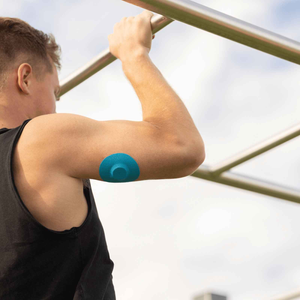
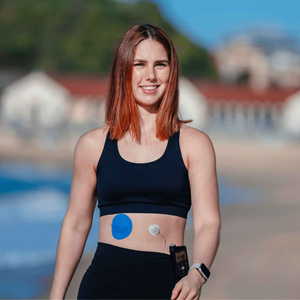
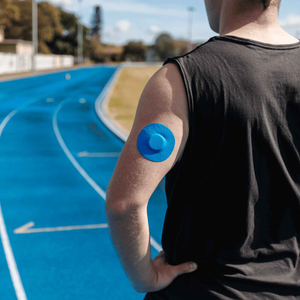
Here's the honest part: that isn't a flaw in you or in the sensor, and it's exactly what an overpatch is for. A Type Strong patch for the Libre sits over the top of the sensor and holds it flat against your skin, backing up the sensor's own adhesive so an ordinary knock is far less likely to cut the wear short. The patch itself holds for 10+ days. A Libre runs to 14, so if you'd like cover for the full session, a fresh patch partway through sees it to the end.
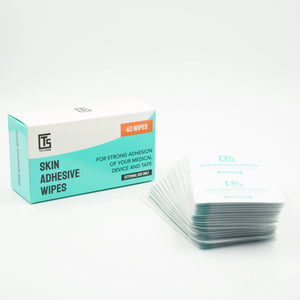
New to patches? This beginner's guide on whether you really need a patch is a calm place to start, and a little skin prep beforehand helps any patch last.
The bottom line
This is a choice between two ways of living with a sensor, not a ranking of which is better. Reach for the FreeStyle Libre if you want to start today, spend less, and handle the whole thing yourself. Reach for the Eversense if you'd rather think about your sensor only a couple of times a year and don't mind a procedure and regular calibration to get there.
The right CGM is the one that quietly fits the life you already lead. And if that turns out to be a surface sensor like the Libre, the right CGM patch is what keeps it on your arm through the days that test it.
People also ask
Is the Eversense better than the FreeStyle Libre?
Neither is simply better. The Eversense wears far longer, up to 180 days on the E3 and a year on the 365, but it needs a procedure and calibration. The FreeStyle Libre is self-applied, factory calibrated, and cheaper to start. It really comes down to how hands-on you want to be.
How long does each sensor last?
The FreeStyle Libre 2 runs up to 14 days and the Libre 3 Plus up to 15. The Eversense E3 lasts up to 180 days, and the Eversense 365 up to a full year.
Does the FreeStyle Libre need calibration?
No. The Libre 2 and Libre 3 are factory calibrated, so there are no routine fingersticks needed to keep them accurate.
Do I need a patch for a FreeStyle Libre sensor?
You might not, but plenty of people find one helps. The Libre sits on the surface and can be knocked loose, so an overpatch holds it flat and makes an early loss far less likely. The implanted Eversense doesn't use one.
References
Abbott. (2026). FreeStyle Libre 3 Plus system. freestyle.abbott/us-en/products/freestyle-libre-3.html (accessed July 2026).
Abbott. (2026). FreeStyle Libre 2 system. freestyle.abbott/us-en/products/freestyle-libre-2.html (accessed July 2026).
Senseonics. (2026). Eversense E3 CGM system. eversensecgm.com (accessed July 2026).
Senseonics. (2026). Eversense 365 CGM system. eversensecgm.com/eversense-365 (accessed July 2026).


