

Most Accurate CGM in 2026: Which Continuous Glucose Monitor Should You Choose?

Which CGM is best in 2026
For most adults, the Dexcom G7 15 Day and the FreeStyle Libre 3 Plus are the two most accurate CGMs available in 2026, both sitting around 8.0 to 8.2% MARD with a 15 day wear cycle. Pump users on the MiniMed 780G still do best on the Medtronic Guardian 4, and anyone who wants to think about their sensor as little as possible should look at the Eversense 365. There is no single best CGM, only the best fit for how you check readings, whether you use a pump, and how long you want between changes.

What changed since 2025
Two of last year's five devices are gone. Abbott discontinued FreeStyle Libre 2 and FreeStyle Libre 3 on 30 September 2025, replacing both with the FreeStyle Libre 2 Plus and FreeStyle Libre 3 Plus. Dexcom stopped manufacturing the G6 as of 1 July 2026, shifting new prescriptions to the Dexcom G7 and the new Dexcom G7 15 Day. If your sensor was one of these, it was not a small update, it was retired, and your prescriber needs to issue a script for whichever replacement fits your reader or pump.
The upside of the reset is wear time. Three of 2026's leading sensors, the FreeStyle Libre 2 Plus, FreeStyle Libre 3 Plus, and Dexcom G7 15 Day, now run 15 days instead of 10 to 14, which is a genuine reduction in how often you insert a new sensor.
How to choose a CGM in 2026
Choosing a CGM comes down to five things: how accurate it needs to be, how long you want it to last, whether you're willing to calibrate, what it needs to talk to, and whether a patch exists for it.
What MARD really tells you
Mean absolute relative difference (MARD) measures how close a sensor's readings sit to a lab reference. Lower is better. Here's the honest part: these figures come from separate manufacturer trials, not a single head-to-head test, so a 0.2 point gap between two devices is not proof one is meaningfully more accurate day to day. All of the sensors below sit in the 8 to 9% range, which clinicians consider clinically reliable for treatment decisions. Treat MARD as a tiebreaker, not the whole decision.
Wear cycle
Wear time ranges from 7 days (Medtronic Guardian 4) to 365 days (Eversense 365), with most surface sensors now landing on 10 or 15 days. Longer wear means fewer insertions and less adhesive on your skin over a month, but only if the sensor actually stays on for the full cycle. A knocked or snagged sensor lost on day 4 costs you the same sensor whether it was rated for 7 days or 15.
Calibration
Every device on this list is factory calibrated, meaning no routine fingersticks. The Eversense 365 is the exception: it needs fingerstick calibration twice daily for the first 21 days after implantation, then drops to roughly once a week.
Pump and app
If you use, or plan to use, an automated insulin delivery pump, compatibility narrows your choice fast. The Medtronic Guardian 4 only works with the MiniMed 780G. Dexcom G7 and Omnipod 5 pair with several major pumps. The Eversense 365 and the Libre Plus sensors integrate with Sequel's twiist system. Confirm compatibility with your specific pump before switching, since integrations are still rolling out through 2026.
Patch fit
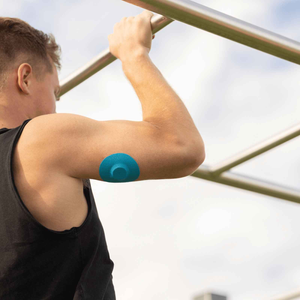
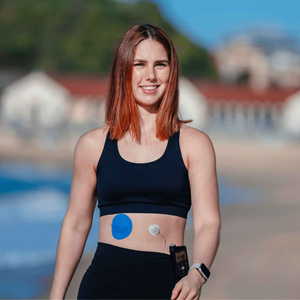
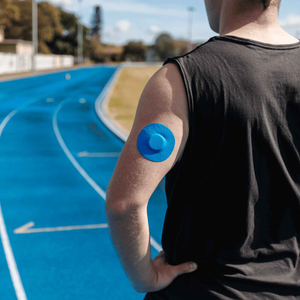
A device-matched adhesive patch is the difference between a sensor that lasts its full rated wear and one lost early to sweat, a doorframe, or a shirt sleeve. Not every device has one. There is currently no Type Strong patch for the Eversense 365, since its removable transmitter uses its own daily adhesive rather than an overpatch.
Quick comparison: the 5 best CGMs in 2026 at a glance
|
Device |
Wear cycle |
Adult MARD |
Calibration |
Works with a pump |
|
Dexcom G7 / G7 15 Day |
10 or 15 days |
8.2% (G7), 8.0% (G7 15 Day) |
Factory calibrated |
Tandem, Omnipod 5, iLet |
|
FreeStyle Libre 3 Plus |
15 days |
Around 8.2% |
Factory calibrated |
twiist, expanding |
|
FreeStyle Libre 2 Plus |
15 days |
Around 8.2% |
Factory calibrated |
Omnipod 5, twiist |
|
Medtronic Guardian 4 |
7 days |
8.7% |
Factory calibrated |
MiniMed 780G only |
|
Eversense 365 |
Up to 365 days |
Around 8.8% |
Twice daily, then weekly |
twiist |
Keep your CGM secure to get accurate results. Shop CGM patches

Dexcom G7 and Dexcom G7 15 Day
The Dexcom G7 remains one of the most widely used real time CGMs, with a 10 day wear cycle, roughly a 30 minute warm-up, and an 8.2% adult MARD in Dexcom's own trials. The newer Dexcom G7 15 Day extends that to 15.5 days of wear (including a 12 hour grace period) and edges accuracy slightly to 8.0%, though it's currently approved for adults 18 and older only, and pump compatibility is still catching up to the standard G7.
Both are rated waterproof to roughly 8 feet for 24 hours and connect directly to a compatible Apple Watch. If you use a pump, check which of the two your system supports before switching, since Tandem's integration with the 15 Day version was still rolling out through early 2026.
Dexcom G7 / ONE+ adhesive patches are cut to the G7's updated shape, since a standard patch can leave the edges exposed. For more on what changed from the older model, see our guide to the advantages of Dexcom G7 over G6.

Still on a G6? The legacy note
Dexcom stopped manufacturing the G6 on 1 July 2026. Existing devices keep working, and pharmacy stock may last into late 2026, but Dexcom cannot guarantee availability past that. If your prescription is due for renewal, talk to your provider about the G7 or G7 15 Day now rather than waiting for stock to run out. Dexcom G6 adhesive patches remain available for anyone still on existing G6 stock.

FreeStyle Libre 3 Plus
The FreeStyle Libre 3 Plus replaced the standard Libre 3 in September 2025. It keeps the same real time, scan free data delivery, streaming a fresh reading to your phone roughly every minute, and adds a longer 15 day wear cycle with an adult MARD of around 8.2% in a pooled clinical study. It's also the smallest CGM sensor on the market, about the size of two stacked pennies, which makes it less likely to catch on clothing but also means a smaller adhesive footprint holding it to your skin.
It's approved for ages 2 and up, water resistant to about 1 metre for 30 minutes, and integrates with Sequel's twiist pump, with pump support expanding through 2026.
FreeStyle Libre adhesive patches fit the Libre 3 Plus without modification, since the Plus sensor is the same physical size as the outgoing Libre 3.
FreeStyle Libre 2 Plus
The FreeStyle Libre 2 Plus replaced the standard Libre 2, also in September 2025. Unlike the Libre 3 Plus, it stays scan based: you check your phone or reader for the current number, though optional alarms will still reach you within about 6 metres without a scan. It shares the same 15 day wear cycle and roughly 8.2% adult MARD as its Libre 3 Plus sibling, in a slightly larger sensor body.
It's the CGM sensor Omnipod 5 has supported the longest outside of Dexcom, connecting directly to the Omnipod 5 controller without a separate app.
The same FreeStyle Libre adhesive patches fit both Plus sensors. If you're weighing the two Libre generations against each other, our Libre 2 Plus vs Libre 3 Plus comparison goes deeper on which suits which lifestyle.

Medtronic Guardian 4
The Medtronic Guardian 4 is the CGM built specifically to pair with the MiniMed 780G insulin pump, letting the pump adjust delivery automatically off the sensor's readings. That integration is the whole reason to choose it: on its own, it's the least accurate device on this list at 8.7% MARD, and its 7 day wear cycle is the shortest here too. For pump users already on, or planning to move to, the 780G system, the trade-off is usually worth it.
Medtronic Guardian adhesive patches are cut to the Guardian's distinct footprint, which differs from both Dexcom and Libre. If you're deciding between a Libre and a Guardian setup, see our FreeStyle Libre vs Medtronic Guardian comparison.
Eversense 365
The Eversense 365 takes a completely different approach: a sensor about the size of a grain of rice is implanted under the skin of the upper arm during a short in-office procedure, and a removable smart transmitter sits on top, held by a daily adhesive patch. One implant lasts up to a full year, by far the longest wear cycle of any CGM, with a pivotal-trial MARD of around 8.8%.
The trade-offs are real: twice daily fingerstick calibration for the first 21 days, then weekly after that, and a clinical procedure required for insertion and removal, so it's worth discussing with your healthcare provider before committing. There is no Type Strong patch for the Eversense 365, since the daily transmitter adhesive is a different product entirely from a CGM overpatch. If you're weighing it against a surface sensor, our Libre vs Eversense comparison walks through the trade-offs in more detail.
 Omnipod 5 is a pump, not a CGM
The Omnipod 5 is a tubeless automated insulin delivery pump, not a glucose sensor in its own right. To get automated dosing out of it, you pair it with a compatible CGM: currently the Dexcom G6, Dexcom G7, or FreeStyle Libre 2 Plus, with FreeStyle Libre 3 Plus support expanding in some regions. The pod itself, which holds and delivers insulin, is worn for up to 3 days before replacement.
Because the Omnipod 5 pod is bulkier than a standalone CGM sensor, it takes more direct knocks, particularly on active kids. Omnipod adhesive patches are cut to the pod's shape rather than a sensor footprint. Our guide on whether Omnipod 5 needs a special patch covers this in more detail.
Why the patch matters as much as the device
Every device above measures glucose in the fluid just under your skin, and that measurement only holds up if the sensor stays exactly where it was placed. A knocked or snagged sensor is not something you press back down; it's a whole sensor lost, along with whatever data it was mid-cycle collecting.
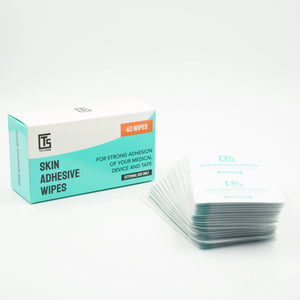
A well fitted patch typically adds 10 or more days of secure hold on top of a sensor's own adhesive, though the exact number depends on your skin, activity level, and climate rather than the device itself. Proper skin prep before applying a patch makes the biggest single difference to how long any patch lasts. For a deeper look at realistic wear expectations, see how long a CGM patch should last.
If you're new to CGMs altogether, our guides to what a CGM is and how it works and the different types of CGMs for type 1 diabetes are good starting points before you compare specific devices.
People also ask
What is the most accurate CGM in 2026?
The Dexcom G7 15 Day and FreeStyle Libre 3 Plus are currently the most accurate, both around 8.0 to 8.2% adult MARD. The figures come from separate manufacturer trials rather than a single head-to-head study, so treat them as close rather than one being definitively better.
What does MARD actually measure?
MARD, mean absolute relative difference, measures how close a CGM's readings are to a lab glucose reference. The lower the percentage, the closer the sensor tracks true blood glucose on average.
How does the Libre 3 Plus compare with the Dexcom G7?
Both are real time sensors with similar accuracy in the low 8% MARD range. The Libre 3 Plus wears for 15 days versus the G7's 10 days and is the smaller of the two sensors, while the G7 has broader current pump integration.
What replaces the Libre 3 and the Dexcom G6?
FreeStyle Libre 3 Plus replaced the Libre 3 in September 2025. Dexcom G6 was replaced by the Dexcom G7 and Dexcom G7 15 Day, with G6 manufacturing ending on 1 July 2026.
How long does each sensor last?
Wear time ranges from 7 days (Medtronic Guardian 4) to 10 days (Dexcom G7) to 15 days (FreeStyle Libre 2 Plus, FreeStyle Libre 3 Plus, Dexcom G7 15 Day) to up to 365 days per implant (Eversense 365).
Which CGMs work with an insulin pump?
Dexcom G7 pairs with several pumps including Tandem and Omnipod 5. FreeStyle Libre 2 Plus and Libre 3 Plus pair with Omnipod 5 and Sequel's twiist. Medtronic Guardian 4 only pairs with the MiniMed 780G. Eversense 365 pairs with twiist.
Is the Omnipod 5 a CGM?
No. Omnipod 5 is an insulin delivery pump. It needs a separate compatible CGM, currently Dexcom G6, Dexcom G7, or FreeStyle Libre 2 Plus, to automate insulin dosing.
How long should the patch itself last?
A correctly fitted, device-matched patch should hold for 10 days or more with proper skin prep, though this varies with activity, sweat, and climate rather than being fixed by the device you wear.

Which CGM fits your life
If you want the smallest sensor and the most current accuracy data, look at the FreeStyle Libre 3 Plus or the Dexcom G7 15 Day. If you're on the MiniMed 780G, the Medtronic Guardian 4 is the practical choice regardless of its shorter wear time. If you'd rather think about your sensor once a year instead of every one to two weeks, the Eversense 365 is worth a conversation with your provider. And if you're on an automated insulin delivery pump already, the CGM you choose depends on what that specific pump currently supports.
Whichever device you land on, its rated accuracy and wear time are only the starting point. A sensor that lifts early loses you data no matter how good its MARD looked on paper. Pairing your device with a model-specific patch and proper skin prep is what actually gets you the full wear cycle you're paying for.
Consult your healthcare provider before switching CGMs, and confirm current insurance or Medicare coverage and pump compatibility for your region, since both are still shifting through 2026.
References
-
American Diabetes Association Consumer Guide, product pages for Dexcom G7 and G7 15 Day, FreeStyle Libre 3, Guardian 4 Sensor, and Eversense 365. consumerguide.diabetes.org
-
Dexcom. "New Dexcom G7 15 Day CGM." dexcom.com
-
Express Scripts. "Dexcom Phasing Out G6 System." express-scripts.com
-
Abbott. "Transition to FreeStyle Libre 3 Plus or 2 Plus." freestyleprovider.abbott
-
Accuracy of a 15-day Factory-Calibrated Continuous Glucose Monitoring System With Improved Sensor Design. PubMed, 2025.
-
Evaluation of Accuracy and Safety of the 365-Day Implantable Eversense Continuous Glucose Monitoring System: The ENHANCE Study. PubMed, 2025.
-
Omnipod. "Omnipod 5 and CGM Sensor Integrations." omnipod.com


